

Example 1: Submeters Only
This scenario is common for retail properties with limited submetering.
- The property has a mix of landlord and tenant spaces
- A property has a total of 3 submeters for which data is tracked (no aggregate meters)
- All meters are in-metric and therefore contribute to whole building metrics
- No tenant data is available and therefore no meters are assigned to tenant spaces
- All 3 submeters and are assigned to Base Building - Common Areas
.png?fit=max&auto=format&n=W9COhIzjFYd7p3yh&q=85&s=e68d79c655387c3f2693dd5cef9289f6)
-
Total energy whole building data coverage = 33%
If only submeters are available, whole building data coverage should be equal to the sum of all landlord and tenant space coverages because they are based on the same meters.
- Total energy tenant spaces data coverage = 0%
- Total energy common areas data coverage = 100%
Example 2: Aggregate & Submeters
This scenario is common for properties with aggregate whole building meters and some submeters. Users can report whole building data with 100% coverage and track partial coverages as additional tenant and common area submeters are brought online.
- The property has a mix of landlord and tenant spaces
- A property has a total of 7 submeters for which data is tracked
- 2 aggregate meters are in-metric and therefore contribute to whole building metrics
- 3 out-of-metric meters are assigned to Tenant Spaces
- 2 out-of-metric meters are assigned to Common Areas
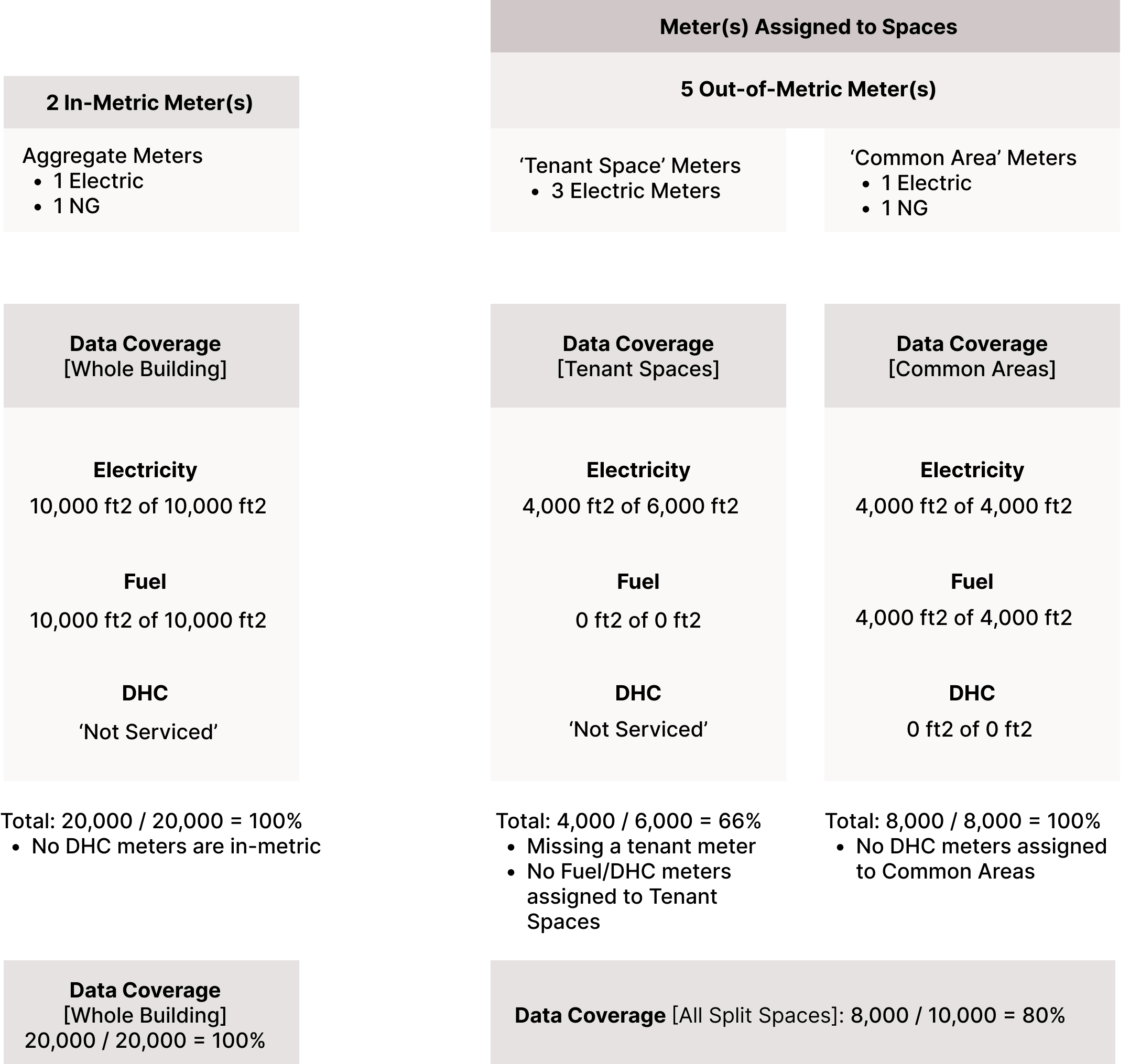
- Total energy whole building data coverage = 100%
-
The **in-metric **aggregate meters reflect total whole building consumption for both electricity and fuel
Aggregate whole building meters always represent 100% coverage for the utility type.
-
The **in-metric **aggregate meters reflect total whole building consumption for both electricity and fuel
- Total energy tenant spaces data coverage = 66%
- Tenant spaces are not serviced by fuel or DHC
- 4,000 ft2 of the 6,000 ft2 of tenant spaces serviced by electricity have data available from the out-of-metric submeters
- Total energy common areas data coverage = 100%
- Common Areas are serviced by both electricity and fuel out-of-metric meters
- 4,000 ft2 of the 4,000 ft2 of common areas serviced by electricity and fuel have data available from the assigned out-of-metric submeters